Books
Books by Sheikh Dr. Osama Bahar, to read in full on this site or download as a PDF.
-
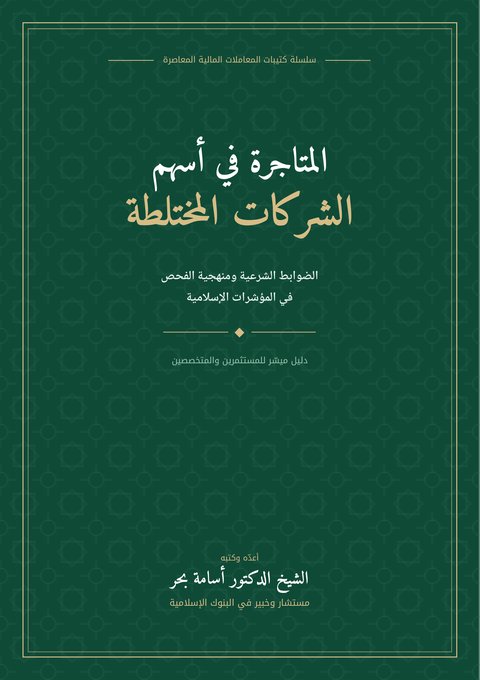
Trading in the Shares of Mixed Companies
Shariah controls and the screening methodology of Islamic indices
In Arabic 42 pages PDF 0.8 MB
A simple guide that sets out the Shariah controls on owning and trading company shares, and the Shariah screening methodology adopted by Islamic indices, in a clear style suited to investors and specialists.
-
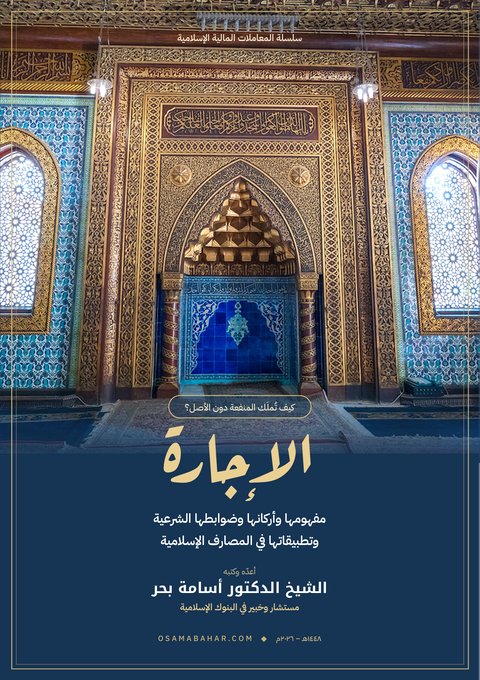
Ijarah (Leasing)
Its concept, pillars, Shariah controls and applications in Islamic banks
In Arabic 22 pages PDF 2.7 MB
A simple booklet, originally a lecture, that sets out the rulings of the ijarah contract, its Shariah controls and its applications in Islamic banks, for those who work in Islamic banking and those who study it.
-
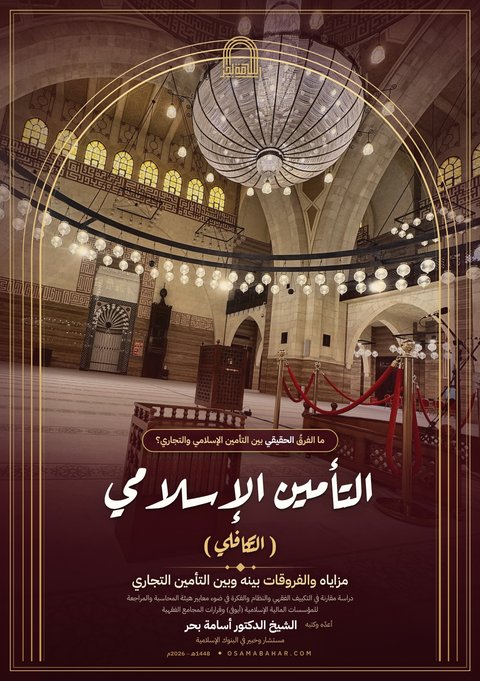
Islamic (Takaful) Insurance
Its merits and the differences between it and commercial insurance
In Arabic 43 pages PDF 2.9 MB
What is the real difference between Islamic insurance and commercial insurance? Is it a difference of name and wording, or a difference of reality and substance? And what makes one of them permissible and the other forbidden, when their outward form is alike? A concise, well-grounded answer that relies on the Shariah standards of the Accounting and Auditing Organization for Islamic Financial Institutions (AAOIFI) and the resolutions of the fiqh academies, and sets out the differences in juristic characterisation, in system and structure, and in idea and purpose.
-
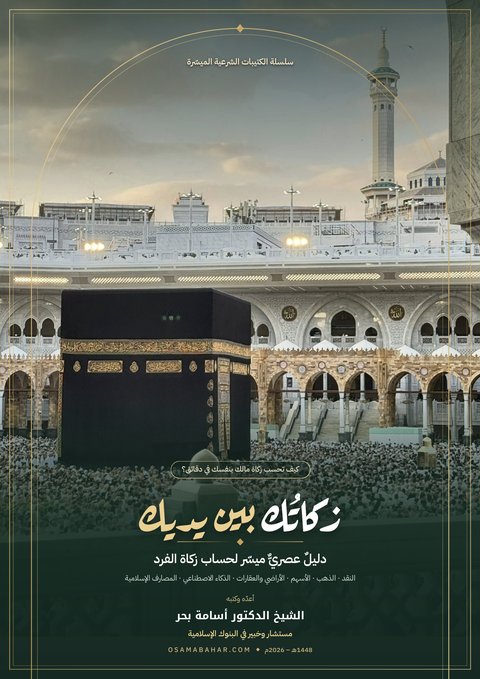
Your Zakat in Your Hands
A modern, simple guide to calculating an individual’s zakat
In Arabic 28 pages PDF 2.6 MB
A modern guide that puts the calculation of zakat in your hands: its rulings and conditions in a plain style, the “zakat day” method in five steps, and the zakat of cash, gold, shares and real estate with examples and tables, together with a proposed method for using artificial intelligence to calculate zakat, and an account of zakat in Islamic banks and in zakat service companies.
-
Orphan Companies and Their Applications in Islamic Banks
A concise study in banking and Shariah
In Arabic 28 pages PDF 1.2 MB
-
Bitcoin in the Balance of Shariah, Economics and Technology
A Shariah and economic study of digital cryptocurrencies
In Arabic 64 pages PDF 1.4 MB
-
The History of Banking Tawarruq in the Kingdom of Bahrain
A documentary study of the origins of the tawarruq product and the development of its mechanisms in Bahrain’s Islamic banks
In Arabic 51 pages PDF 5.5 MB
How was banking tawarruq born in the Kingdom of Bahrain? Where did the idea of tawarruq in diamonds come from? And how did a product once accused of collusion and sham transactions become a financing instrument that the Kingdom’s Islamic banks use every day? Told by one of the founders of the experience, there from its start in 2000, this book follows tawarruq from a paper in fiqh to a complete banking product: from international metals on the London market to diamonds in the markets of Dubai and Manama, by way of the fatwas of Shariah boards, the resolutions of the fiqh academies and the Shariah standard, ending with proposed controls and a view of the future of tawarruq in shares and sukuk.
-
This booklet introduces the murabaha sale, the most widespread mode of finance in Islamic banks. It sets out its place among the kinds of sale, the conditions of sale in general and of murabaha in particular, and the difference between ordinary murabaha and banking murabaha, then presents the main practical issues connected with it: from the promise to purchase and the security deposit, to late payment, rescheduling and guarantees.
-
-
Differences Between Islamic and Conventional Banks
A concise study of the foundations, identity and practice of banking
In Arabic 16 pages PDF 0.6 MB
This booklet sets out briefly the foundation on which Islamic banks and conventional banks each rest and the identity that distinguishes each of them. It then explains the main practical differences between them — in Shariah supervision, the source of profit, repayment, real-estate finance and investment — and closes with a table summarising these differences.